
Dropped Kerbs in Weston-super-Mare
T Attwell Driveways provides professional dropped kerb installations designed to improve driveway access and comply with local authority requirements. Homeowners looking to create or improve access to their property can rely on a practical, fully managed service that covers planning, preparation, and installation.
Dropped Kerbs for Safe Driveway Access
With experience working across Bridgwater, Burnham-on-Sea, Taunton, Wells, Weston-super-Mare, Yeovil, and the surrounding areas, our team understands both council expectations and real-world access needs. If you’re already browsing work completed by T Attwell Driveways nearby, checking recent feedback on the Reviews page, or ready to reach out via our online form, clear advice is always available from the start.
When You Might Need Driveway Access Improvements
Driveway access is not just about convenience; it is often a legal and safety requirement. A dropped kerb is needed whenever a vehicle crosses a public pavement to enter a private driveway. Without the correct access, the edge of the pavement can become damaged, unsafe for pedestrians, and non-compliant with council regulations.
You may need a dropped kerb if you are creating a new driveway, replacing an existing one, or changing how vehicles enter your property. Homes with raised kerbs, narrow access points, or changing parking layouts often benefit from a properly planned solution that improves safety while protecting the surrounding pavement.
As a council-approved contractor, T Attwell Driveways ensures all dropped kerb work meets current standards, avoiding issues that can arise from unapproved or poorly installed access points.
Council-Approved Dropped Kerb Installations
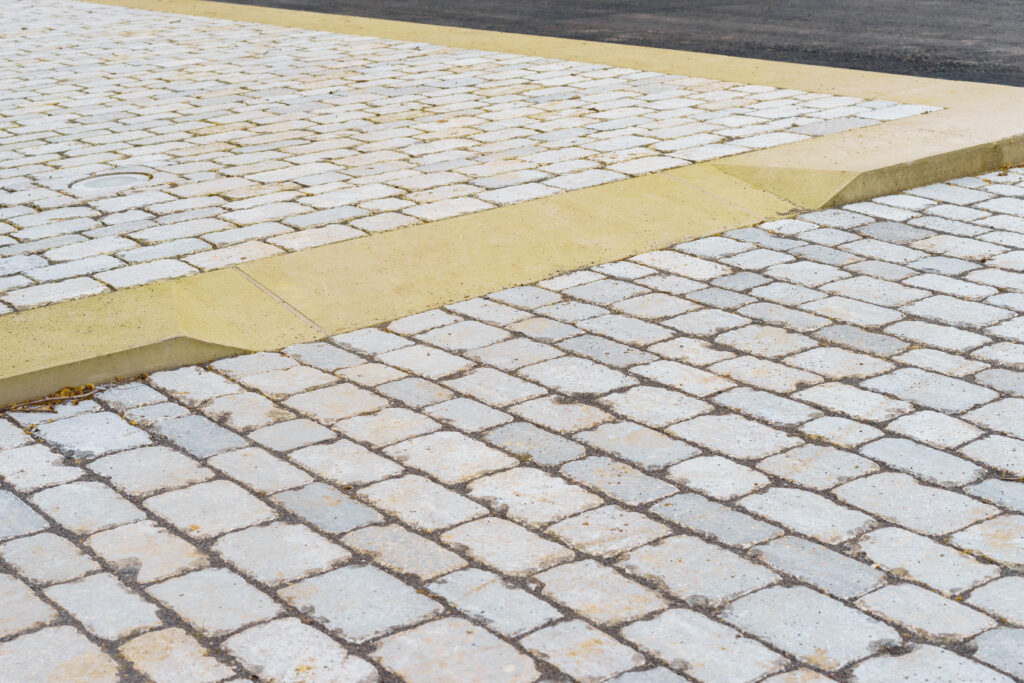
Dropped kerbs are controlled by local authorities because they affect public footpaths, drainage, and pedestrian safety. Any installation must meet strict guidelines covering kerb height, gradients, materials, and visibility.
Using a council-approved contractor is essential. Work carried out without approval can lead to enforcement action, costly reinstatement, or refusal of future permissions. T Attwell Driveways follows the correct process from the outset, ensuring installations are compliant and completed to the required specification.
This approach applies consistently across Bridgwater, Burnham-on-Sea, Taunton, Wells, Weston-super-Mare, Yeovil, and the surrounding areas, where local authority standards are carefully followed to deliver safe, approved results.
New Dropped Kerb Installations
A new dropped kerb is often required when creating a driveway for the first time or converting part of a front garden into off-road parking. This involves lowering the kerb, strengthening the pavement structure, and ensuring the transition between road and driveway is smooth and durable.
New dropped kerb installations must consider drainage, vehicle weight, and pedestrian safety. Proper groundwork ensures the pavement does not crack or sink over time, while accurate finishing prevents trip hazards and standing water.
Every dropped kerb installed by T Attwell Driveways is designed to integrate seamlessly with the driveway surface, whether block paving, resin, or tarmac is being used beyond the pavement line.
Extending a Dropped Kerb For Wider Access
Extending a dropped kerb is a common requirement where existing access is too narrow for modern vehicles or multiple cars. Many older dropped kerbs were designed for smaller cars, or households with only one vehicle, and can make manoeuvring difficult or unsafe.
An extension widens the access point, reducing tyre strain, improving visibility, and making daily use far more practical. The process still requires council approval, as additional pavement structure must be reinforced to support vehicle weight.
Careful planning ensures the extension blends neatly with the existing pavement and driveway, creating a clean, compliant finish rather than an obvious add-on.
What Our Dropped Kerb Installation Process Involves
Dropped kerb projects are managed carefully to ensure safety, compliance, and long-term durability. The process typically includes:
- Assessing driveway access requirements
- Communication with the relevant Council Department
- Installation of temporary barriers for pedestrian safety
- Removing existing kerbs and pavement sections
- Installing reinforced foundations
- Laying council-approved kerbs and surfacing
- Finishing edges to meet safety standards
This structured approach ensures the pavement remains strong, stable, and safe for both vehicles and pedestrians
Why Professional Installation Matters
Dropped kerbs may look straightforward, but they are structural installations that support repeated vehicle loading. Poor workmanship can lead to cracked pavements, loose kerbs, drainage issues, and failed inspections.
Using an experienced contractor ensures correct materials, proper depths, and accurate gradients are achieved. It also prevents delays caused by rejected work or failed approvals, which can significantly increase overall costs.
T Attwell Driveways applies the same standards to dropped kerbs as to all driveway access projects carried out across Bridgwater, Burnham-on-Sea, Taunton, Wells, Weston-super-Mare, Yeovil, and the surrounding areas. Why not get in touch if you’re considering a new or extended installation?

FAQs – Dropped Kerbs
Do I need council approval for a dropped kerb?
Yes. Dropped kerbs affect public pavements and must be approved by your local authority. Using a council-approved contractor ensures the work meets required standards and avoids enforcement issues.
How long does a dropped kerb installation take?
Most dropped kerb installations are completed within a few days, depending on the size of the access and ground conditions. This includes excavation, foundation work, and finishing.
Can a dropped kerb be installed at the same time as a new driveway?
Yes. Installing a dropped kerb alongside driveway construction is often the most efficient approach, ensuring levels align correctly and access is finished cleanly in one project.
Is extending a dropped kerb always possible?
In many cases, yes, but feasibility depends on pavement width, nearby street furniture, drainage, and visibility. A site assessment confirms what is permitted before work begins.
What happens if a dropped kerb is installed without approval?
Unauthorised dropped kerbs can be removed at the homeowner’s expense and may prevent future approval. This is why council-approved installation is essential
Contact T Attwell Driveways – Your Local Dropped Kerb Specialists
If you need to improve driveway access, install a new dropped kerb, or extend an existing one, T Attwell Driveways provides clear advice and compliant workmanship. For guidance, assessments, or quotations, call the team today on 07886 568601.